by Corrine Watson
March 4, 2025
The Immortal Woman by Su Chang; House of Anansi Press; 384 pages; $18.00.
Su Chang’s debut novel, The Immortal Woman captures the nuanced ways inherited trauma shapes identity. Following the lives of Lemei and her daughter Lin, The Immortal Woman follows these characters as they strive for survival in hopes for a better life for the next generation, if not themselves. Although these characters portray a front of resilience, Chang aptly illustrates the ways trauma breeds wounds in the next generation and the damaging effects of self-abandonment.
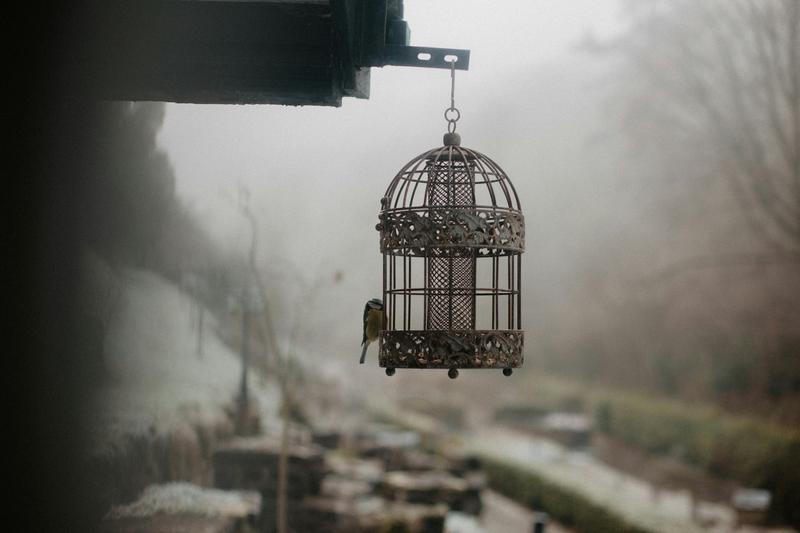
The novel opens with Lemei’s adolescence during the rise of the Chinese Communist Party in 1960’s Shanghai. Lemei wants to speak out against the propagandists and stand up to the bullies in the student-run paramilitary group called the Red Guard, but she’s torn between her desire for justice and her need to stay in line for the sake of her family’s safety. After her father dies as a political prisoner, Lemei’s position becomes precarious and she attempts to keep her head down. hen she’s offered a leadership position as the first female Red Guard, she understands that acceptance or rejection is a political statement and she can’t afford to choose wrong. Participation comes with additional scrutiny and the cost of fitting in is unquestionable fealty to the cause. Chang describes this as being “like a pet canary in a gold cage… Well-fed and groomed but never free again."
Opening with Lemei’s story sets the tone of the novel that self-preservation comes at a cost. We see this manifested as Lemei has to suppress her own sense of justice and need for truth by playing along with Party enforcement. She even moves on to printing fluff pieces and outright propaganda in her first job as a reporter. Yet after years of experiencing and witnessing violence and self-suppression, something in her breaks, and the only hope she can see for the future is to prime her daughter to be a perfectly assimilated American.
As we transition to Lin’s story, Chang captures an array of nuanced topics from racial and national diaspora to the disillusionment of the American Dream. What stands out in Lin’s story are the self-sabotaging ways she commits to fitting in as an American. In college, she rejects the friendship of a boy she grew up with and any association with Chinese clubs and organizations in favor of white friends. In defiance of her mother’s vision for her US citizenship, working a stable job with her degree in mathematics, Lin takes an internship at a Toronto theater writing plays. Yet even in this space, she still feels like an outsider, desperate for community.
Cheng captures Lin’s disappointment in herself throughout the book as if her struggles to be part of a community are the equivalent to failing a test she’s studied for her entire life. Although her English and pronunciations are noted to be relatively perfect, she still misses the mark on cultural nuances. “She thought she’d digested the many idiotic American idioms, but they inevitably slipped out the wrong way when it was showtime." As we see her struggle, it becomes clear that she views friendship as a secret formula to be followed rather than a personal connection. And after her daughter is born and she struggles through the added isolation of postpartum, the weight of all of her repressed trauma comes to the surface as “memories of her lonely childhood crashed back at night for a reality check. She’d never learned the art of friendship growing up. She’d always known she was different, that she had a mission, that she was the executioner of Ma’s Grand Plan." Chang uses this revelation not only to mirror her mother’s breaking point around the same age, but to highlight the ways trauma is internalized and carried down to the next generation.
Chang uses this disillusion to allow Lemei to reflect on her part in Lin’s struggles in adulthood. While neither vocalize their regrets, it does draw them closer together. After an argument about Lin’s pursuit of a creative career in Canada over something more stable in the states, Lemei is, at first, angry about this deviation from her vision for her daughter’s life. But her idea of the American Dream is shattered after visiting her childhood friend who immigrated to the states. “After almost thirty years, Lemei was sure her friend could switch between cultures effortlessly, like slipping in and out of different outfits. Now, watching Wei from the sidewalk of Chinatown, she was peering into a parallel universe."
Chang uses this encounter to give Lemei a reality check that sets her down the path to reevaluate the ideals she had not only about an idealized life in another country, but also a new found understanding and passion to promote her own nation. But she also understands that the damage has already been done and she recognizes her role in teaching her daughter to idolize not just the classic “work hard hand have a comfortable life” pitch for the American Dream, but whiteness. “Thanks to her years of gospel-like teaching, her daughter had admired, worshipped, those men and women throughout her youth, perhaps endowing them with an aura of mythology, extrapolating two-dimensional photos into vivid realms of divinity." While Lemei’s memories of this indoctrination are more educational in the form of pictures in magazine’s, Lin gives us a darker portrait of her childhood as she notes the ways her mother took drastic measures to ensure her daughter would fit in by altering her physical appearance. This included surgery and cosmetics to soften her Chinese features and lighten her skin to make her present more white, and grueling language practices with stones under her tongue to force her to form English words in the correct dialect. And in every step Lin was forced to deny her culture and heritage.
The Immortal Woman uses Lemei’s mother-daughter relationship to illustrate the lasting effects of trauma and the ways we sacrifice pieces of ourselves in the name of self-preservation. Throughout the novel, Chang captures the resilience of both Lin and Lemei in a way that draws on the reader's sympathy for their struggles, but also presents a route towards a hopeful future as they step back to find a way back to their roots and a sense of safety and community that finally feels like home.
__________________________________________________________________________________________________________________________________________________________________________
__________________________________________________________________________________________________________________________________________________________________________
__________________________________________________________________________________________________________________________________________________________________________
Inherited Scars: Exploring the Effects of Generational Trauma and Resilience in The Immortal Woman by Su Chang
FICTION REVIEW

Image by Beth Jnr from Unsplash
Corrine Watson is a freelance writer and editor based in Charlotte, NC. Her work has appeared in Wretched Creations and the Southern Review of Books. Follow her on Twitter @CorrineWatson6.
__________________________________________________________________________________________________________________________________________________________________________
__________________________________________________________________________________________________________________________________________________________________________


© 2025 Iron Oak Editions




Stay Connected to Our Literary Community. Subscribe to Our Newsletter