by Amelia Loeffler
March 18, 2025
We Contain Landscapes by Patrycja Humienik; Tinhouse; 120 pages; $16.95.
Patrycja Humienik’s debut poetry collection We Contain Landscapes moves like a current, swelling, stilling, spiraling and surging past superimposed boundaries of place and time. Humienik explores parallel geographies of the physical world, the digital landscape, and the body. Through letters, meditations and memories, Humienik’s debut collection follows the speaker’s pursuit to capture the ephemeral, ever-changing tide of belonging. The author’s collection expressly asks “To whom do we belong, and at what cost?” but prompts the reader to expand this line of questioning and wonder, “To where do we belong?” and “What anchors us to the people and places we belong to?”
Humienik searches for answers to these questions in both the tangible and intangible world, examining physical places and digital landscapes. We Contain Landscapes spans countries, oceans, and generations, drawing from Humienik’s experience as a daughter of previously undocumented Polish immigrants and a queer woman, and her ability to balance and reconcile the myriad elements that create an individual’s sense of identity and belonging is one of the collection’s many strengths. Through five sections, the poet encompasses the influences of intergenerational dynamics, coming of age, sexuality, friendship and religion, all while keeping the reader afloat, buoyed by undulating narrative and lyricism.
Serving as a throughline in the collection is a series of epistolary poems, letters from the speaker to immigrant daughters, that question familial, romantic and platonic relationships. What does it mean to be a good daughter? A woman? Readers find evidence of the speaker’s own feeling of containment in these identities: “The condition of a woman is to stay./ The condition of a woman is to grieve.”, “A good daughter is a secret keeper.”, “I’m not sure a daughter can ever be grateful enough.” Through her connections with other women who share her background, the speaker is able to examine the nature of belonging to people and places both known and unknown.
The collection also makes pointed reference to the influence of technology and the internet on the speaker’s sense of identity. The speaker finds refuge in the internet, erases her search history, scrolls Instagram, and scrolls Twitter, searching for a digital anchor. The presence of all this technology throughout the coming of age narrative and the speaker’s quest to define belonging illustrates how the internet can both facilitate connection and create confusion, further muddying the clear definitions the speaker seeks. Perhaps this lack of clarity is the point; despite her searching, both online and in the physical world, the speaker does not find a set answer. Instead, she continues to meditate on belonging.
While Humienik ruminates on several recurring themes throughout the collection, each return to a familiar idea is made new through crystalline imagery. The poet recalls the past without lapsing into nostalgia, instead envisioning an expansive future and cuts to the quick in her frank descriptions of the world and calls for a shifting of the tides: “There is a Polish saying that quiet waters tear the banks.”, “Life is precious, monstrous, marked by tides.”, “Admit that/ the water is rising./ Admit that/ you need a flood.”
We Contain Landscapes is especially prescient now. In “Salt of the Earth,” the speaker’s memories of childhood as a daughter of immigrants are tangled with anti-immigrant sentiment. “Archival” describes narratives of immigration: “Migration is the story of longing/ is the story. To risk/ rupture for rapture.” Risk resurfaces in “Wilno”: “My father tells me his father, born near Wilno,/spent a month freezing in the wooden wagon/ [...] He left his birthplace to keep his country.” “Borderwound” describes the presence of political boundaries and walls across the world, referencing the US-Mexico border, described by poet and Chicana scholar Gloria Anzaldúa as “an open wound,” Poland’s walled border with Belarus, and Poland’s borders with Lithuania and Ukraine. Calling on personal experience and personal history, Humienik writes with attention to the politics of our time, not shying away from the hurt inflicted by the open wounds of borders everywhere. Readers could interpret this as a call to action, encouraging them to turn attention toward stories from immigrants— the speaker herself “will not turn away from the ache of this world.”
In the collection’s antepenultimate poem, “On Belonging,” the speaker comes to a conclusion: “If I make of myself the mythological protagonist,/ she must journey against fixed belonging.” Herein lies the answer, or lack thereof, to the collection’s central question. Rather than settling on an answer, deciding to whom or to where she belongs, the speaker moves against the current of belonging: deciding that “If belonging is a form,/ its constraints erode the land.”
In removing the constraint of fixed belonging to one or several places or people, the speaker is freed to belong to herself “without the rot of control.”
__________________________________________________________________________________________________________________________________________________________________________
__________________________________________________________________________________________________________________________________________________________________________
__________________________________________________________________________________________________________________________________________________________________________
The Journey Against Fixed Belonging in Patrycja Humienik’s We Contain Landscapes
POETRY

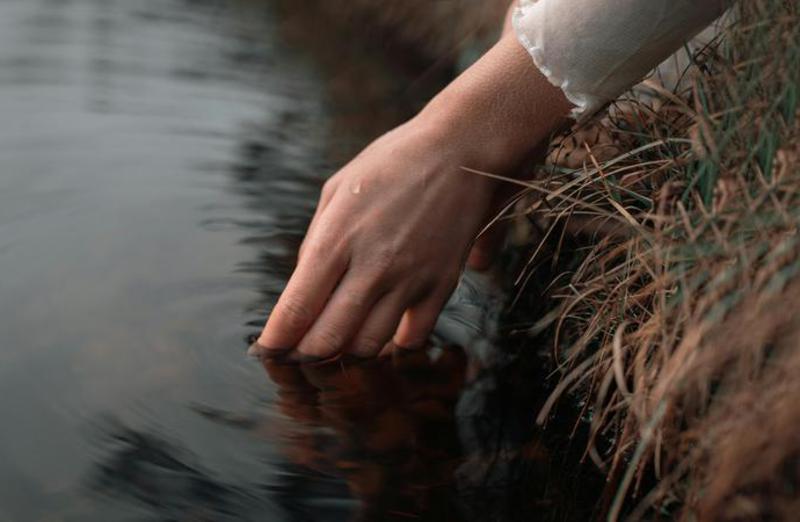
Image by Alexander Strelkov from Pexels
__________________________________________________________________________________________________________________________________________________________________________
© 2025 Iron Oak Editions




Stay Connected to Our Literary Community. Subscribe to Our Newsletter




__________________________________________________________________________________________________________________________________________________________________________
Amelia Loeffler is a born and raised Kentuckian currently living in Nashville, Tennessee. She is a graduate of The University of North Carolina at Chapel Hill. Amelia’s work can be found in Poetry Magazine, Variant Literature, and The Chestnut Review, among other publications.