by Mikal Wix
November 4, 2025
Natural History by Brandon Kilbourne; Graywolf Press; 96 pages; $17.00.
Brandon Kilbourne, winner of the 2025 Cave Canem Prize, is perhaps best known for his work in evolutionary biology. I say perhaps because this wasn’t true for this reader. I have followed his literary achievements for a few years now after I first discovered him within the pages of, ironically, West Trade Review and our Winter 2021 and Spring 2022 issues. In fact, both poems, “Moqueca Chronicle” and “Erinnerung” appear in Kilbourne’s debut book of poems, Natural History, published by Graywolf Press. And it’s the biologist within Kilbourne that sees connections between human beings and plants, minerals, and animals, all as cargo on ships, and all ‘collected’ to be enslaved or studied and displayed, that imbues his poetry with such fierceness.
It’s not any surprise that Kilbourne’s research into mother earth inflects his poetry. Merriam-Webster’s defines a naturalist first and foremost as “one who advocates or practices naturalism.” As philosophy, naturalism is often seen as a metaphysical position that rejects the supernatural. With respect to literature and poetry, naturalism is typically defined by realistic and deterministic depictions of life, where the existence of free will is denied and our lives are shaped by forces beyond our control. But as a poetics, Dr. Kilbourne’s artistry reveals that natural history is a duplicitous beast, at once emphasizing observation and inquiry, while simultaneously revealing the internecine and insidious implications of these actions, not only about the relationships between humans and the environment, but also about the damaging effects humans have had and, in fact, still have upon each other. In this sense of poetic naturalism, Dr. Kilbourne is an “emergence,” to use a term from his specific field of study, evolutionary theory — a poetry that cannot be predicted or explained from prior works. His poems are as unique as they are astonishing.
Few other poets today operate in this genre of poetics, specifically eco-poetics and Anthropocene poetics. Perhaps Forrest Gander, or Jorie Graham, Don McKay, or even Elizabeth DeLoughrey turn in this orbit, too, with some overlap with Kilbourne’s themes and how they are excavated throughout deep time. But Kilbourne’s rare forms of expression, how he draws on paleontology and zoology (e.g., “Our Gilled Forebear”), how our inheritance of exploitation is still seen in museum dioramas (e.g., “The Giraffe Titan [I]”), and how colonialism and racism are unmasked by the thematic use of naturalism and evolutionary theory (e.g., “Blindfold Wonder”), are all informed by his background as an evolutionary biologist. His ability to merge science with poetry allows him to maintain multiple perspectives: from “The Last Sea Cow’s Testimony”—
This slaughter / finding us nearly thirty winters ago, back when /
every cow, otter, and seal had to learn survivor’s / wisdom: trade your curiosity for fear.
When I read Kilbourne’s poems in Natural History, I think back to Kierkegaard’s Fear and Trembling. I see the entire scientific enterprise of Europe-dominated natural history as a teleological project, where the goal is to further scientific exploration and knowledge. And in the execution of this, basic human respect, dignity, and rights were sacrificed to this ‘higher’ goal of science, gathering specimens and data. In Kilbourne’s poetry, I see this being subverted. The humans, the animals, and the institutions that were created by this sacrifice, or suspense, of human dignity and rights are confronted by the poems’ refusal to tease out the benefit of the science from the horrific brutality of colonialism and racism. Both things are held in a single, intricate construction of verses. This is the true beauty of Dr. Kilbourne’s poetry. His poems insist that we consider and hold this complete and more devastating truth in our hearts. From the poem, “Natural History, the Curious Institution” —
The right to sell slaves in New Spain accords / with our grand scheme—Imagine the returns /
in American HERBS, the CURES and REMEDIES!
As one could hope, Dr. Kilbourne’s book of poetry comes with detailed notes, and I encourage readers to explore these added details thoroughly. They help to guide and share further information about the origins and influences of the poet’s inward journey while crafting these works. In addition, more historical perspectives are offered (e.g., “Lettow-Vorbeck and His Uncatchable Lizard” in which the notes reveal the actual human cost of the German general’s campaign in East Africa during World War I).
Even the cover photo for the book is Dr. Kilbourne’s handiwork, too. And if I had any other wish for a more impressive and colossal debut from a poet, it would be only to hope for another book soon.
__________________________________________________________________________________________________________________________________________________________________________
__________________________________________________________________________________________________________________________________________________________________________
__________________________________________________________________________________________________________________________________________________________________________
The Emergence of Brandon Kilbourne’s Poetics in Natural History
POETRY REVIEW
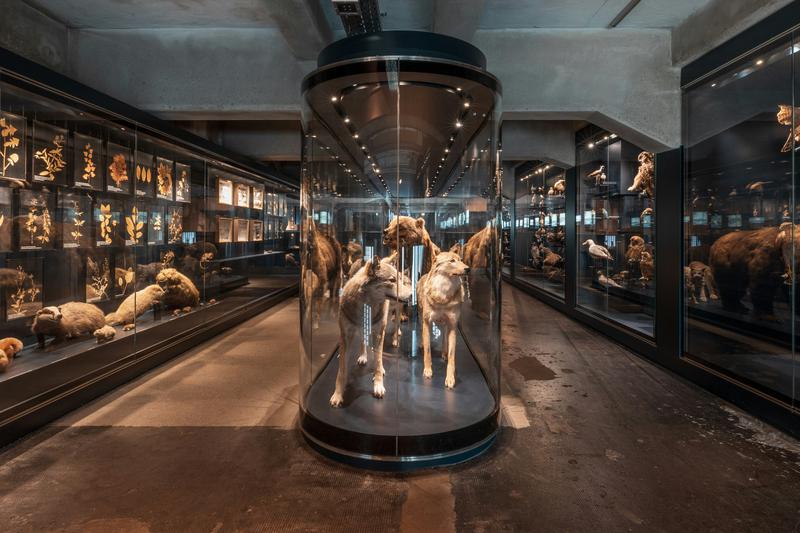
Image by Peter Workman from Unsplash
Mikal Wix lives in the American South, which seeds insight into many outlooks, including revenant visions from the closet. Their work can be found or is forthcoming in Corvus Review, Olit, Berkeley Poetry Review, Tahoma Literary Review, Roi Fainéant Press, decomp journal, and elsewhere, and works as a science editor by day.
__________________________________________________________________________________________________________________________________________________________________________

__________________________________________________________________________________________________________________________________________________________________________

© 2025 Iron Oak Editions



Stay Connected to Our Literary Community. Subscribe to Our Substack Roots & Words