by Claire Jussel
September 16, 2025
Blue Opening by Chet'la Sebree; Tin House; 96 pages; $16.99.
Chet’la Sebree’s latest poetry collection, Blue Opening, is one of those marvelous books that seems to emit a tantalizing fizz when first cracked open. Even in the front matter, the dedication–which is a poem in of itself–opens the doorway to a profound and invigorating collection. Spanning thematic frequencies of creation, inheritance, grief, desire, illness, religion, mothering, and mystery, Sebree’s text holds big aches, musings, and intimacies spectacularly prismed in pattern and language.
Blue Opening is a collection that revels in poetry and language as a tool for meaning making, and Sebree wields chisels of diction to crack open geodes of insight into our linguistic and physical worlds. Throughout the book, the poet pulls apart etymological and linguistic possibilities. As the speaker of “Entry” notes, “I seek truth in each prism like a dictionary definition– / find fact in each entry, tidy in its articulation of knowledge.” Sebree both attempts to find control in defining slippery notions and re-imagines certain definitions by breaking words down to their roots. For example, while contemplating the origins of life, Sebree writes “ghost theory. Eden : edinu ; delightful place : plain. / All the words for where we’re from / used to be none other than guttural grunts. // All of unknown origin.”
One of the most resonant and intriguing investigations of language can be found in the poem “Matrix,” which lists numerous definitions for this term, including “Mold from which other forms are born; [...] closest most of us will come to modern miracle [...] material wombed humans / can create. one of the few phenomena we can replicate.” While this book is chock full of resonant touchstones, Sebree’s poetic and thematic genius can be best surmised in her use of matrix as motif across the collection. From the dedication to the final poem, matrices appear both in direct naming and in reference to form, creation, and repetition numerous times. The most critical and engrossing questions within the text point back to the matrix–how and from what does creation occur? Where does such reproduction and variance originate from? How might the “you” addressed throughout the book of the potential future child be created in the context of autoimmune illness and other inheritances? These are vast questions, and ones that Sebree successfully engages with by anchoring the collection in perpetual connection to the body and attention to particular forms, both of which nod back to the definitions of matrices.
Some of the most evocative images evocative images in the collection arrive in unabashed descriptions of the body. From treating the “thick stick / of wound-healing protein protecting two scrunched follicles” of ingrown hair that opens into self-reflection to enduring “painroot wrought from spine and scapular to each of my carpal bones” while awaiting diagnosis, to encountering the bodily matrix in “slick ruby ruins from which I could birth spring / artichoke, summer melon,” Sebree presents the body in all her variety and viscerality. This language of the corporeal figure proves essential for a collection reckoning with the coinciding potentials of mothering and lupus. Through lush imagery, the poet builds a collection that is not merely interested in the concepts of genesis, loss, and reproduction, but how these origins and cycles are experienced in the flesh.
Sebree also invokes matrices in form and organization throughout the text. Each section opens with a sequence of poems titled “Root Logic” that utilize and repeat elements of dictionary definition templates. This sense of creating from preexisting forms can also be found in the bounty of sonnets across the book, perhaps most notably in the heroic crown of sonnets "Genesis" in which sonnets are turned scripture in their shape upon the page, and notions of religious thought are rumpled and entangled in the speaker’s matrilineal line.
In addition to these poem sequences, Sebree casts a patterned net of poems and images that repeat, echo, and stack upon each other with dazzling intricacy. Much like the star nurseries and other origin points she invokes, beginnings and endings, destructions and genesises lean together as bright points of creation. As images and details flow into one another from poem to poem, Sebree shapes a structure that evokes a geometric matrix, arranging poems in such a way to allow for transformation while seeking answers and acquiescing to mystery. This layering effect is especially prevalent in the culmination of the collection, “An End,” which reaches all the way back towards the opening images of the book in its final lines:
the shore of knowing what is
to come–which pressure
causes metamorphoses,
Protostar pre-nucleoynthesis,
And which pressure produces fissures,
Fault-lining matrix-lodged turquoise and jade;
For there’s knowledge I don’t want
So I scramble-search my way
Back to the water, the garden, the egg.
Through Sebree’s astute, vulnerable, and curious poetics, Blue Opening reconfigures both the mundane and complex into startling valences. The resulting collection of poems is both deeply intimate, wildly expansive, and begs to be read again at the turn of the last page.
__________________________________________________________________________________________________________________________________________________________________________
__________________________________________________________________________________________________________________________________________________________________________
__________________________________________________________________________________________________________________________________________________________________________
“Phenomena We Can Replicate”: Origins and Matrices in Chet’la Sebree’s Blue Opening
POETRY REVIEW
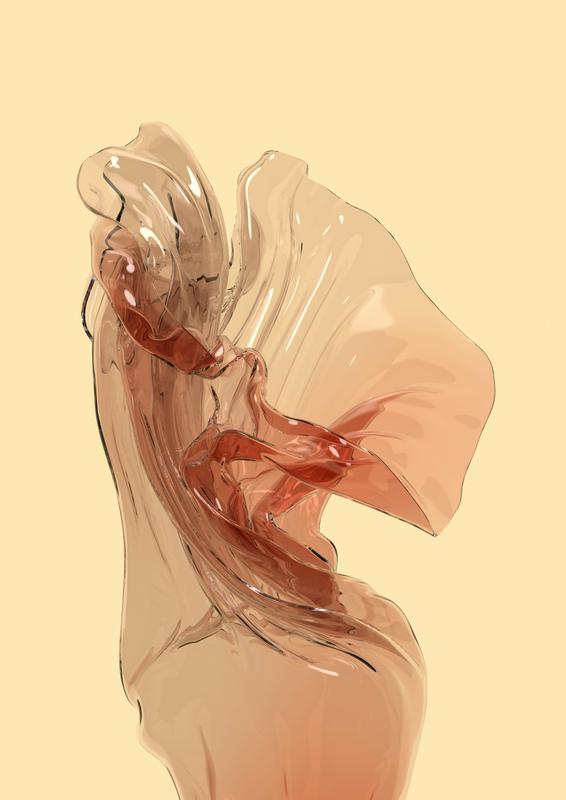
Image by Align Towards Spine from Unsplash
Claire Jussel is a poet, writer, and artist from Boise, Idaho. Her work has appeared in or is forthcoming in West Trade Review, Wizards in Space, Split Rock Review, Black Fox Literary Magazine, and SEISMA Magazine. She currently resides in Ames, Iowa where she is pursuing her MFA in Creative Writing & Environment at Iowa State University.
__________________________________________________________________________________________________________________________________________________________________________
© 2025 Iron Oak Editions



Stay Connected to Our Literary Community. Subscribe to Our Substack Roots & Words