by Tara E. Friedman
January 13, 2026
The Last Quarter of the Moon by Chi Zijian; Milkweed Editions; 344 pages; $20.00.
Chi Zijian’s The Last Quarter of the Moon, winner of the Mao Dun Literary Award, brings us an elegiac portrait of a vanishing world. In choosing to follow a community of nomadic reindeer-herders in China, Zijian constructs a narrative that is intimate yet sweeping, full of silent observation, cultural preservation, and the inevitable sorrow of change. As readers follow the perspective of an elderly Evenki woman, The Last Quarter of the Moon acts as a meditation on memory, identity, sacred spaces, and the bonds between humans and animals.
One of Zijian’s achievements in the novel is the reflexive and respectful documentation of the Evenki people. Throughout the novel, translated through the brilliant work of Bruce Humes, Zijian avoids sentimentality; instead, her narrator is a detail-oriented observer moving through unyielding love, unimaginable loss, and uncertainty for her community’s future. Her depictions of the Malu (Clan Spirits), her Eni and Ama’s (Mother Tamara and Father Linke) love story, and daily chores, like baking khleb (unleavened bread) demonstrate the sustainability and longevity of the tribe: “Lena [sister] and I learned chores from Mother; how to tan a hide, smoke meat strips to make jerky, milk reindeer, make a birch-bark basket or canoe, sew roe-deerskin moccasins and gloves, [and] make a reindeer saddle.” Zijian’s retellings capture a lived reality that are not meant to be staged artifacts only intended for outsiders’ fascination or sympathy. By contrast, these snapshots provide confirmation of the resilience found within the people, their traditions, and the landscape of the Evenki.
Zijian pays close attention to the herds that serve as powerful companions and co-creators of the stories of the Evenki people. The reindeer “forage very delicately. When they pass through a meadow, they nibble lightly so that hardly a blade of grass is harmed, and what should be green remains green. When they eat birch and willow leaves, they just take a few mouthfuls and move on, leaving the tree lush with branches and leaves.” These animals exemplify the traits that define the Evenki: the importance of community and the delicate interdependence of all living things. In this vein, Zijian’s reverent tone is steady and repetitive. Late in the novel, Secretary Gu, a government representative, is sent to convince the narrator to relocate, citing roaming reindeers’ harm to the forest’s delicate ecosystem. The narrator responds: “I really wanted to tell him that our reindeer have always kissed the forest. Compared to the loggers who number in the tens of thousands, we and our animals are just a handful of dragonflies skimming the water’s surface.” While both practical to the Evenki’s way of life and symbolic of their cultural heritage, Zijian’s tone of respect, for people, the reindeer, and their shared landscape, highlights the endurance of the intricate and delicate web of relationships that sustains all.
Zijian’s juxtaposition of the timeless beauty of Evenki traditions against the impending modernization strikes a current and repeated nerve. Like the reindeer, the forest is a constant, living presence, helping to craft the tribe’s livelihood, beliefs, and futures. Throughout the novel, the narrator details stories of reindeer herding under the stars, trees whispering warnings, and lightning storms bringing comfort. However, among these, Zijian foreshadows creeping modernity. On the narrator’s wedding night, her husband “uttered the word ‘eternal’ many times, and that sounds like an oath, but oaths are rarely forever.” These unrealistic promises set the stage for the rest of the novel, complete with sharp intrusions of outside forces: Japanese invaders, Chinese traders, and Soviet planes dropping bombs. When these outside influences begin to take hold, even within the tribe, conflicting viewpoints abound: “Concerning education, Valodya and I were not of the same mind. He believed that children should go to a school to study, while it seemed to me that learning to recognize all sorts of plants and animals in the mountains, understanding how to get along with them harmoniously, and being able to understand the significance of changes in the wind, frost, snow, and rain – all these were a kind of education.”
Readers will sense the narrator’s bewilderment as she tries to understand the beauty of life defined, not by movement and fresh air, but by outside noise and rigidity of thought. She posits, “We and the reindeer craved quiet, so from then on as soon as the logging season began, we relocated more frequently . . .We cherished the springtime more than ever, for it marked the end of the tree-harvesting season, when the forest regained its former tranquility.” These slow-paced erosions of cultural identity throughout history are as haunting as they are heartbreaking to endure. Zijian offers no easy answers in the novel nor does she place blame; she expertly incorporates this tension, between honoring heritage and adapting to modern demands, and avoids romanticizing the past. The novel highlights how belonging and authenticity can often wage war even within individuals, and suggests that while survival may require adaptation, it will come with costs, such as tranquility and loss of tradition.
During a time when cultural homogenization threatens diversity of thought, expression, and tradition, The Last Quarter of the Moon serves as a poignant reminder of what is at stake. This is not only a story about loss of identity, it is a plea for empathy, preservation, and acceptance of cultural difference. Despite its somber subject matter and nonlinear structure, the moments of profound beauty – familial recollections, cultural celebrations, the serenity of reindeer in winter – stand strong. Beautifully written and deeply moving, Zijian’s novel asks us to reflect on what it means to live well by honoring and preserving our communities, the natural world, and the art of storytelling.
__________________________________________________________________________________________________________________________________________________________________________
__________________________________________________________________________________________________________________________________________________________________________
__________________________________________________________________________________________________________________________________________________________________________
“Skimming The Water’s Surface": Interdependence and Memory in Chi Zijian’s The Last Quarter of the Moon
FICTION REVIEW

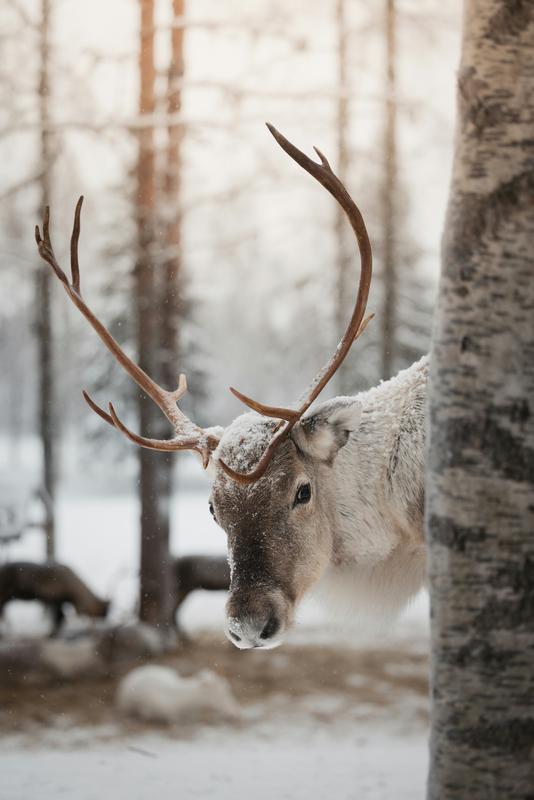
Image by Janosch Diggleman from UnSplash
Tara E. Friedman currently resides in Eastern Pennsylvania with her husband and family. When not writing or teaching, she is happily immersed in a variety of outdoor activities. She proudly serves as English faculty at Widener University in Chester, Pennsylvania. While she presented and published on critical thinking and writing center theory and pedagogy, her current research focuses on resilience in children and young adults, literature and the environment, and American humor.
__________________________________________________________________________________________________________________________________________________________________________
© 2025 Iron Oak Editions


__________________________________________________________________________________________________________________________________________________________________________
© 2026 Iron Oak Editions




Stay Connected to Our Literary Community. Subscribe to Our Substack Roots & Words